In short
Moong dal khichdi is rice and split yellow moong cooked soft with ghee, cumin and ginger, eaten in Indian homes when digestion feels low. Classical texts call moong light and easy to digest, but khichdi is a food and not a treatment, so see a vaidya if symptoms continue.
Moong dal khichdi is the food Indian homes turn to when the stomach is tired, after fever, or after a heavy week of eating. Rice and split yellow moong cooked soft with ghee, cumin and ginger. It is simple on purpose. This page gives the method, the Ayurvedic reasoning, and a thicker, warmer version for winter.
6 min read
Why Ayurveda likes moong dal
Green gram (mudga) is described in the classical texts as light and easy to digest, and one of the pulses suited to people with weak digestion. The Bhavaprakasha Nighantu lists it as tridoshahara (calming for all three doshas), grahi (absorbent) and deepana (kindles digestion). The Ashtanga Hridaya recommends it in the nourishing diet after Panchakarma. Split, husked moong dal is the lightest form.
This links to agni (digestive fire): khichdi is food that does not overload a weak fire. For the base idea read that blog first.
Note on evidence. The reasoning above is from the classical texts. We did not find clinical trials on khichdi as a treatment. It is a gentle, balanced meal of grain and pulse, nothing more and nothing less.
Ingredients (serves 2 to 3)
- Rice (basmati or any short grain): 1/2 cup, about 100 g
- Split yellow moong dal: 1/2 cup, about 100 g
- Ghee: 1 tablespoon, plus a little to serve
- Cumin seeds: 1/2 teaspoon
- Fresh ginger, grated: 1/2 inch piece
- Turmeric powder: 1/4 teaspoon
- Hing (asafoetida): a small pinch
- Salt: to taste
- Water: about 4 cups
Method
- Wash. Rinse rice and dal together until the water runs mostly clear. Soak for 20 minutes if you have time. It cooks softer.
- Temper. Heat ghee in a pressure cooker. Add cumin, then hing and ginger. Let it sizzle for 30 seconds.
- Cook. Add the drained rice and dal, turmeric, salt and 4 cups water. Pressure cook for 3 whistles on medium.
- Check. Let the pressure drop on its own. The khichdi should be soft and a little loose. It thickens as it cools. Add hot water to loosen.
- Serve. Top with a spoon of ghee. Serve warm.
A warmer winter version
- Add 1/4 teaspoon of black pepper and a pinch of dry ginger powder.
- Cook with a handful of diced carrot, pumpkin or bottle gourd.
- Use a little more ghee, as the classical advice for the cold season is richer, sweeter food. See our winter routine in Ayurveda guide.
When khichdi is the right meal
- During or after a cold, fever or stomach upset, when appetite is low.
- After a few days of heavy or outside food.
- As a light dinner.
Who should be careful
- Diabetes: khichdi has a lot of rice. Use less rice and more dal, and ask your doctor for portion advice.
- Gas or bloating with pulses: the Ashtanga Hridaya notes mudga can slightly increase vata. The hing, cumin and ginger help. Cook it well.
- Do not take it with curd. Classical advice, as summarised in sources on mudga, is not to combine green gram soup with curd. See food combining (viruddha ahara).
- Long illness: khichdi is a food, not a treatment. See a doctor if symptoms continue.
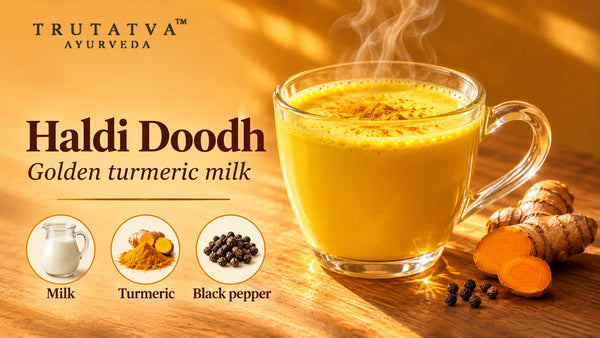
Cold mornings call for something warm to drink as well. See our haldi doodh.
FAQs
Can I eat khichdi every day?
Many people do. It is a balanced meal. Vary the vegetables and keep portions sensible.
Is moong dal khichdi good for weight loss?
It is light and filling, but the result depends on portion size and the ghee you add. We do not claim it causes weight loss.
Whole green moong or split yellow moong?
Split yellow is lighter and easier to digest. Whole green moong needs more cooking and suits stronger digestion.
Can children and older people eat it?
Yes, it is a common first food. Cook it very soft and keep the spice mild.
मूंग दाल खिचड़ी कैसे बनाएं?
चावल और मूंग दाल धोकर घी, जीरा, अदरक और हींग के तड़के के साथ कुकर में 3 सीटी तक पकाएं।
खिचड़ी कब खाएं?
जब पाचन कमज़ोर हो, बुखार या पेट की गड़बड़ी के बाद, या हल्के रात के खाने में।
खिचड़ी के साथ क्या न खाएं?
मूंग के साथ दही न लें, ऐसा शास्त्रों में कहा गया है।
Source: Properties of mudga as listed in the Bhavaprakasha Nighantu and Ashtanga Hridaya, as summarised at ayurveda-origin.pages.dev (green gram). The recipe is a traditional home method. This is general information, not medical advice.
By Nipa Katkoria, Founder, Trutatva · Based on classical texts and personal experience