In short
Facial dark spots are described in Ayurveda as vyanga, a thin, painless, dusky patch on the face linked to aggravated Vata and Pitta from anger and over-exertion. Sunscreen every morning matters most, and a spot that changes, bleeds or appears suddenly needs a dermatologist or vaidya.
Dark spots, uneven tone and patchy pigmentation are among the most common skin concerns in India, where strong sun and humidity play a big part. This guide explains common causes, the Ayurvedic view of skin tone, herbs traditionally used and simple home care.
क्रोधायासप्रकुपितो वायुः पित्तेन संयुतः ॥४५॥
सहसा मुखमागत्य मण्डलं विसृजत्यतः ।
नीरुजं तनुकं श्यावं मुखे व्यङ्गं तमादिशेत् ॥४६॥
"Vata, aggravated by anger and over-exertion and joined with Pitta, rises suddenly to the face and produces a patch. A thin, painless, dusky patch on the face should be known as Vyanga."
— Sushruta Samhita, Nidanasthana 13, verses 45–46
What causes pigmentation and dark spots?
- Sun exposure without sunscreen
- Old acne marks and skin injuries
- Hormonal changes, including pregnancy and the use of some medicines
- Stress, poor sleep and irregular diet
- Pollution and rubbing or picking at the skin
The Ayurvedic view of skin tone
In Ayurveda, skin tone and glow are linked to Pitta and to the Bhrajaka Pitta, the subtle heat that governs the skin. Excess heat, spicy food, sun and stress are traditionally said to disturb it. Classical texts describe facial discolouration under Vyanga. Notice what Sushruta names as the triggers in the verse above: anger and over-exertion, in other words emotional and physical strain, not only the sun. That is why classical care for pigmentation pays attention to stress and rest as well as to what goes on the skin. If you want to learn how your own type works, read our guide to Pitta dosha imbalance.
Herbs traditionally used for skin tone
- Manjistha: a classical herb for skin clarity. See Manjistha benefits for skin.
- Saffron (Kesar): traditionally used for glow and an even tone.
- Licorice (Yashtimadhu): traditionally used in skin care.
- Sandalwood and aloe vera: cooling and soothing for heated skin.
Our Tru Radiance Face Serum brings manjistha, saffron, licorice, aloe vera and neem together in an overnight serum, and our Kesar Prabha Kumkumadi Face Oil follows the classical recipe from the Ashtanga Hridaya.
Quick table: skin tone, herbs and timing
Ayurveda groups skin tone concerns by dosha. This is the traditional way of grouping them, so use it as a guide and not as a diagnosis.
| Dosha Cause (what you notice) | Key Classical Herb | Best Application Time |
|---|---|---|
| Pitta: heated skin from sun, spicy food and stress | Sandalwood and aloe vera, cooling and soothing | Sandalwood face pack with rose water, once or twice a week |
| Vata with Pitta: a thin, painless, dusky patch on the face after anger and over-exertion (Vyanga) | Manjistha, with saffron and licorice | Overnight: a few drops of a face serum or oil at bedtime, used consistently for several weeks |
These pairings come from traditional use, not from human trials. Persistent problems need a vaidya or doctor.
Simple home care
- Sunscreen every morning. This matters more than any other step. Reapply if you are outdoors.
- Gentle cleansing. Avoid scrubbing, which can darken marks.
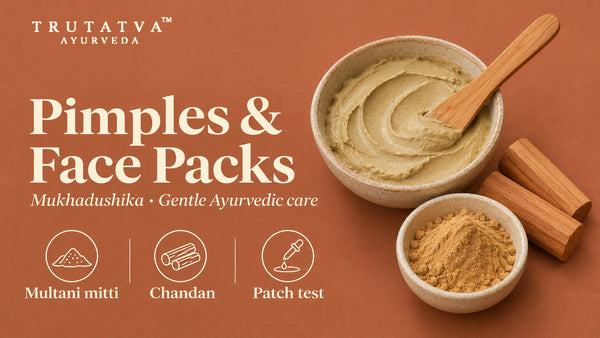
- Cooling face packs. Sandalwood or multani mitti with rose water, once or twice a week.
- Overnight care. A few drops of a face serum or oil at bedtime, used consistently for several weeks.
- Do not pick spots or pimples.
Diet and lifestyle
- Eat fresh fruit, vegetables and enough water.
- Cut back on very spicy, fried and oily food.
- Sleep 7 to 8 hours and manage stress — the verse above names anger and over-exertion as triggers.
When to see a dermatologist
See a dermatologist if a spot changes shape, bleeds, grows fast or is very dark, or if pigmentation is widespread or appeared suddenly. Some conditions such as melasma often need medical care. Home care and Ayurvedic products support skin health and are not a treatment for any condition.
Frequently asked questions
How long does it take to see a difference?
Skin renews slowly. Most people judge results after 4 weeks, and often 60 to 90 days of regular use and daily sun protection.
Can Ayurvedic products remove dark spots completely?
Results vary from person to person. They help support an even-looking tone but cannot promise removal.
Is sunscreen needed with an Ayurvedic routine?
Yes. Sun is a main cause of pigmentation, so daily sun protection is essential.
Is it safe to use lemon juice on dark spots?
Lemon can irritate skin and make it sensitive to sun, so we do not recommend it.
What is Vyanga?
The classical name for thin, painless, dusky patches on the face, described by Sushruta in the verse above. It is often compared to melasma today.
You may also like our FAQ page for product questions.
Sources: Sushruta Samhita, Nidanasthana 13.45–46 (Vyanga); Ashtanga Hridaya (descriptions of Vyanga); traditional Ayurvedic materia medica. This article is for education and does not replace medical advice.