In short
Gond ke laddu are a winter sweet made by frying edible gum in ghee, then mixing it with roasted atta, nuts and jaggery. They are tradition, not proven medicine, so keep to one laddu a day and ask first if you have diabetes.
Gond ke laddu are the winter laddu many Indian homes make once the mornings turn cold. Edible gum (gond, also called dink) is fried in ghee until it puffs up, then mixed with roasted atta, nuts and jaggery. This page gives a simple method that works in a normal kitchen, and says honestly what is tradition and what is proven.
6 min read
Why gond laddu are a winter food
Ayurveda asks people to eat heavier, sweet, oily food in the cold months, because digestion is strong in winter and needs fuel. The Ashtanga Hridaya says this in one line:
भवत्यल्पेन्धनो धातून् स पचेद् वायुनेरितः ।
अतो हिमेऽस्मिन् सेवेत स्वाद्वम्ललवणान् रसान् ॥
Meaning: In the cold, the digestive fire grows strong and is fanned by vata. If it is given too little fuel, it starts to consume the body's own tissues. So in this cold season one should take the sweet, sour and salty tastes.
Source: Ashtanga Hridaya, Sutrasthana 3.8.
Gond laddu fit that advice: they are sweet, rich in ghee and warming with dry ginger. If the tastes are new to you, read the six tastes first, and for the full season see our winter routine in Ayurveda guide.
What is proven and what is not. We could not find controlled human studies on gond laddu themselves. The idea that they give strength in winter, or help after childbirth, comes from home tradition. What we can say for certain is that they are an energy-dense sweet made of ghee, flour, jaggery and nuts.
Ingredients (makes about 12 laddu)
- Edible gum (gond): 3 tablespoons, about 30 g
- Ghee: 1/2 cup, about 100 g
- Whole wheat flour (atta): 1 cup, about 120 g
- Jaggery powder: 3/4 cup, about 100 g
- Almonds, chopped: 1/4 cup
- Dry coconut, grated: 1/4 cup
- Dry ginger powder (sonth): 1/2 teaspoon
- Cardamom powder: 1/2 teaspoon
Method
- Fry the gond. Heat 3 tablespoons of the ghee on low. Add the gond in small batches. Each piece puffs up in a few seconds and turns white and crisp. Lift out with a slotted spoon. If a piece stays hard in the middle, fry it a little longer.
- Crush it. Let the gond cool, then crush it with a rolling pin until it is like coarse sand. Do not skip this step. Large hard pieces are difficult to chew and a choking risk for children and older people.
- Roast the flour. In the same pan add the rest of the ghee and the atta. Roast on low for 10 to 12 minutes, stirring all the time, until it smells nutty and turns golden.
- Add the dry things. Add almonds and coconut and stir for a minute. Turn off the heat. Mix in the crushed gond, dry ginger and cardamom.
- Add jaggery off the heat. Let the mixture cool for about 5 minutes. It should be warm, not hot. Mix in the jaggery powder. If it goes in too hot, the jaggery melts and the laddu turn hard once they cool.
- Shape. While it is still warm, press handfuls into round laddu. If the mixture is too dry to hold, warm a spoon of ghee and mix it in.
Store in an airtight box. They keep for about two to three weeks in a cool kitchen.
How many to eat
One laddu a day, in the morning or with warm milk, is plenty. These are a sweet, not a supplement. More does not mean more strength; it mostly means more sugar and ghee.
Who should be careful
- People with diabetes: jaggery and ghee still count as sugar and fat. Ask your doctor before making these a daily habit.
- Weight and cholesterol: one laddu carries a fair amount of ghee. Keep to one.
- Pregnancy and after childbirth: gond laddu are traditionally given to new mothers. Ask your doctor or vaidya about the amount, because ghee, jaggery and dry ginger all go in.
- Acidity or high pitta: the dry ginger and the richness may feel heavy. Cut the ginger and take a smaller piece.
- Children and the elderly: always crush the gond fine.
- Gond is not gond katira. Gond katira is a different gum that is soaked in water for summer drinks. It is not used in this recipe.
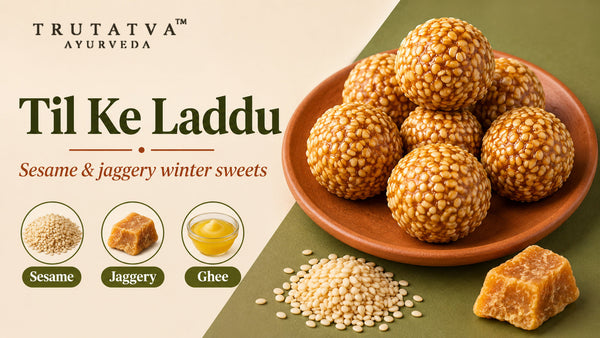
These are best in winter. In hot months the same laddu feel too heavy for most people. More on eating by season in Hemant Ritu. Also try our til ke laddu, a lighter winter laddu.
FAQs
Can I make gond laddu without atta?
Yes. Many homes use roasted makhana or ground dry fruits instead of atta. Fry the gond and mix as above.
Why did my laddu come out hard?
Usually the jaggery was added while the mixture was hot, or too much jaggery went in. Add it off the heat and keep to the ratio above.
Can I use sugar instead of jaggery?
You can use powdered sugar. The taste is milder. Jaggery is the traditional choice.
Which month is best for gond laddu?
The cold months, roughly November to February in most of India.
गोंद के लड्डू कैसे बनाएं?
गोंद को घी में फुलाकर कूट लें, घी में आटा सेंकें, मेवे और सोंठ मिलाएं, ठंडा होने पर गुड़ मिलाकर लड्डू बांधें।
गोंद के लड्डू कब खाएं?
सर्दियों में, सुबह एक लड्डू गुनगुने दूध के साथ।
गोंद के लड्डू किसे नहीं खाने चाहिए?
डायबिटीज़ वाले, ज़्यादा वज़न वाले और जिन्हें एसिडिटी रहती हो, वे पहले डॉक्टर से पूछें।
Source: Ashtanga Hridaya, Sutrasthana 3.8 (Ritucharya). The recipe is a traditional home method. This is general information, not medical advice. Ask a qualified vaidya or doctor if you have a health condition or are pregnant.